


Amanda Robinson, an MRes student at the University of the Highlands and Islands Institute for Northern Studies, has recently begun her studies in Viking and Early Medieval Studies at UHI Perth.
Her research, entitled ‘Spinning Threads: An Analysis of Viking Age Spindle Whorls in the Northern British Isles, ’ will use an analysis of Viking-age textile tools, particularly spindle whorls, to explore the degree of textile specialisation and production that took place within the Northern British Isles from the 8th to the 11th Century.
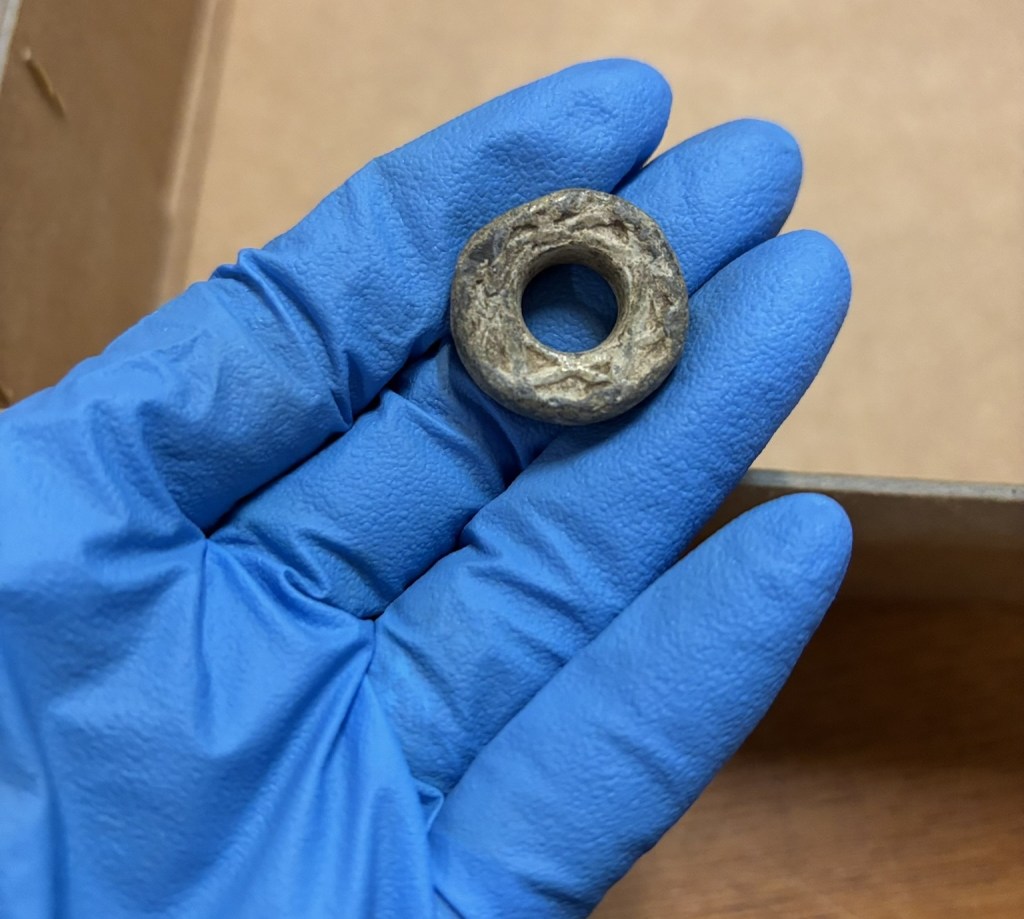
Spindle whorls were weights made from various materials, including stone, bone, ceramic and lead, that were used at the ends of spindles to help twist and spin fibres into thread and yarn during the Viking period. The whorls could be placed at either the top or the bottom of the spindle, depending on the spinner’s preference and the type of yarn being produced. They acted as flywheels, adding momentum to the spinning process and enabling the spinner to create a more consistent and finer thread. They are a common find in archaeological digs from the Viking era in northern Britain.
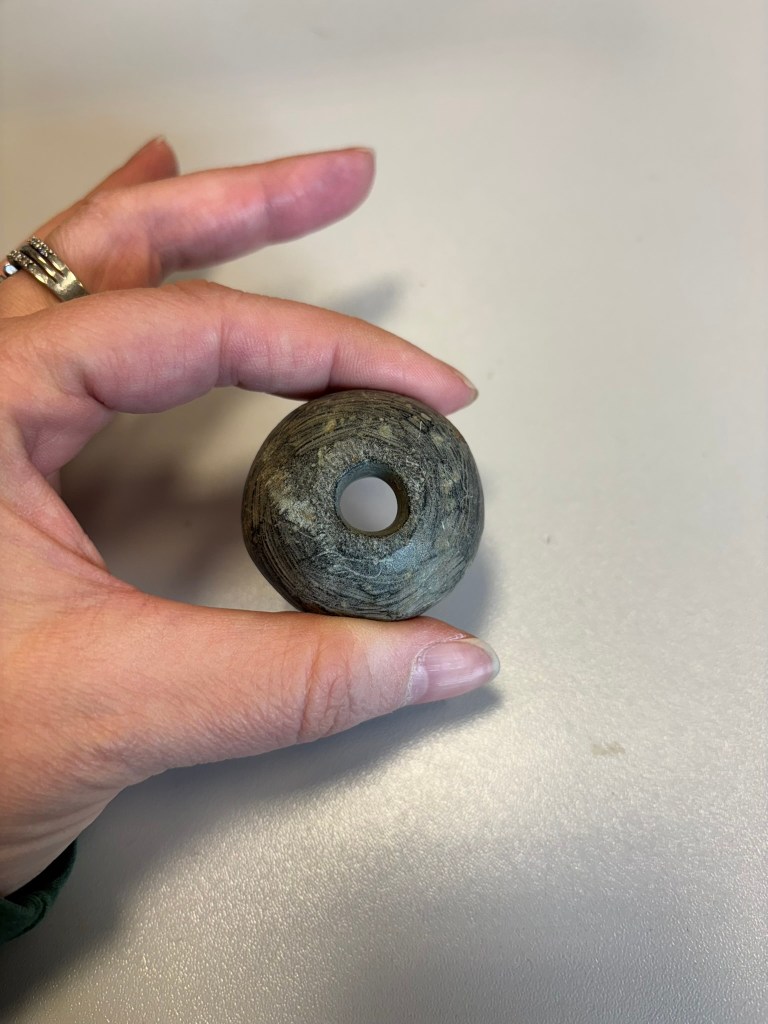
Amanda said, “This research will attempt to analyse the types of spindle whorls uncovered to explore what materials were being sourced, what those materials can tell us, typological changes that may have occurred, and which textile types could have been produced by the whorls uncovered from settlement sites and within burials. Making these connections can provide a foundation for future research in comparative textile analysis, supporting theories that women’s roles as weavers and spinners went well beyond basic household needs.”
Amanda Robinson is a full-time MRes student at the University of the Highlands and Islands Institute for Northern Studies. She graduated with distinction from MacEwan University in Alberta, Canada, earning a BA Honours in Anthropology. Before starting her Master’s program, Amanda gained four years of experience in Cultural Resource Management, where she conducted fieldwork in northern Alberta, Canada.
The featured image at the head of the blog is a spindle whorl found at Jarlshof, Shetland
Amanda’s supervisors are Professor Alex Sanmark (UHI INS), Dr Shane McLeod (UHI INS) and Dr. Michèle Hayeur Smith (Smithsonian Institution).
If you would like to study with the UHI Institute for Northern Studies then email us to start a conversation.


 Odin's Eye Blog
Leave a reply to sean Cancel reply