


An update from Institute for Northern Studies PhD student Anthony Olsson.
At the beginning of my PhD in Faroese poetry and literature, I joked to a friend ‘you’ll find me somewhere windy and expensive in the North Atlantic’. True to form, off I flew to Tórshavn at the beginning of the year. I travelled for a combination of reasons, the usual researcher necessity of going to source by arranging a departmental library visit at the Faculty of Faroese Language and Literature – Føroyamálsdeildin (FMD) at the University of the Faroe Islands – Fróðskaparsetur Føroya. My plan was also to track down a manuscript at the National Library of the Faroe Islands – Landsbókasavnið and to catch up with friends and colleagues. I was kindly given an office for the time I was there at the department which made my library visits more efficient. Whilst in Faroe I attended the Jazz festival, saw a performance at the Nordic House – Norðurlandahúsið í Føroyum, surprisingly I was also present at a baptism conducted by Anne Mette Greve Klemensen, the parish chaplain for Nólsoy at Tórshavn Cathedral – Dómkirkjan and sang Faroese psalms. The primary reason for my visit was to attend a very special evening of ballad singing and dancing.
The story of Sigurd the dragon slayer is known from medieval poems, stone carvings, prose tales and church paintings and can be retold today from stories blending Germanic myths from the migration period with Norse tales and sagas. In the Faroe Islands the story of Sjúrður is given life through a collection of richly evocative ballads that wind, twist and turn over several hours as the narrative unfolds. Even though these stories stretch back in time, that they still resonate now and are sung in similar fashion to how these stories would have been sung and danced generations and generations back to at least the early 17th century is quite remarkable. The Faroese story begins with the necessity of an avengement of Sjúrður’s father who is killed in battle. The extremely abridged version is as follows. The first part is a story of youth and quest which ultimately leads to wealth and treasure as Sjúrður kills a serpent with a specially forged sword. The sword is forged by Regin the smith (who is treacherous and the brother to the serpent) from his father’s broken blade. This leads to fame and the desire by Brynhild to be betrothed to Sjúrður in the second ballad. Sjúrður manages to visit Brynhild in her hall surrounded by fire as his horse carries him through. Sjúrður swears an oath to her and in turn Brynhild wishes him to travel to her father and seek council. Sjúrður disagrees and decides to visit Queen Grimhild. All Sjúrður’s promises go array by various means of sorcery, including a drink that clears Sjúrður’s memory of Brynhild, so that he is engaged to Grimhild’s daughter Gudrun instead. Brynhild in devastation of the perceived betrayal decides that Sjúrður must die. Sjúrður is killed by Gudrun’s brother Gunnar (on the promise of marriage to Brynhild) and Høgni. After Sjúrður is killed Brynhild dies in sadness. This in turn establishes the premise for the third ballad where more revenge is enacted, this time by Gudrun for the killing of Sjúrður. Gudrun is now married to King Artala. Gunnar and Høgni are duly killed and Høgna’s son is to avenge his father’s killing just as Sjúrður avenged his father. This time Artala is the one who is killed and Høgna’s son is the one who profits from an acquisition of gold. In all three ballads the series of events all lead to revenge being meted out in a continuous cycle.
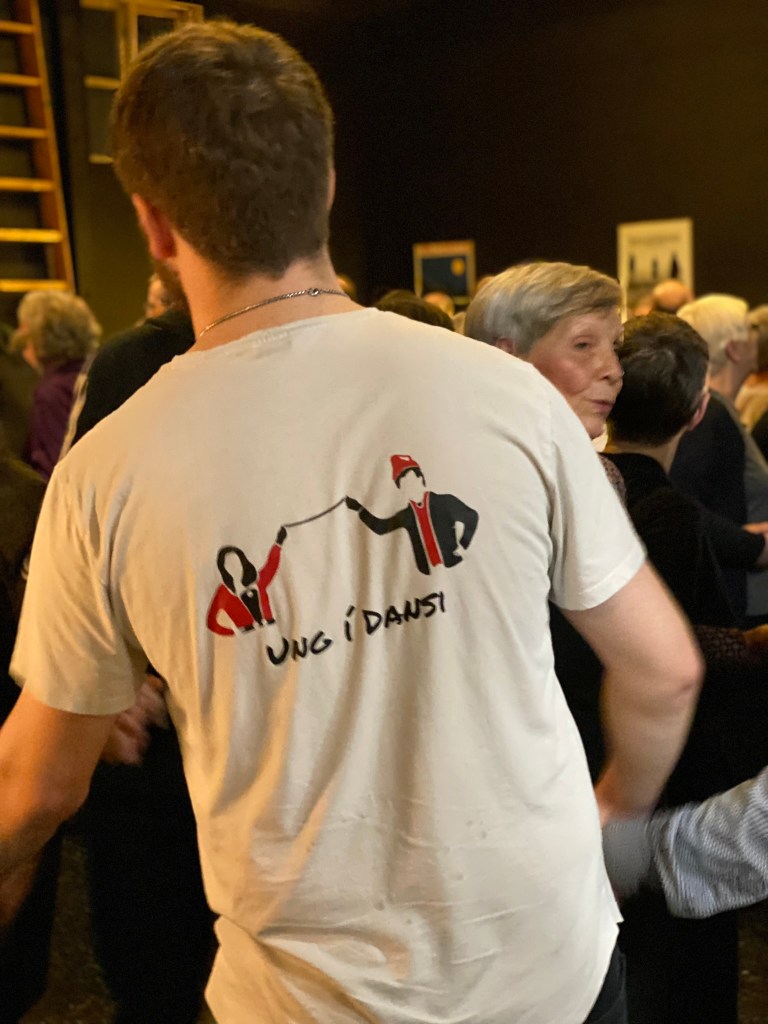
At UHI we know that islanders, as a rule, don’t generally cancel events due to the weather. Atlantic Airways, the Faroese airline don’t tend to cancel flights very much either. However if the wind is howling across the runway in the wrong direction, as Shetlanders know only too well, the challenge of course can be the transportation to the event itself, as was my experience here. As a PhD researcher from UHI Shetland & Orkney, at the Institute of Northern Studies, I am getting used to cancelled ferries and flights, gale force winds and weather warnings. Last year, when I lived in Scalloway, at the end of January I was fortunate enough to attend Shetland’s winter tradition of ‘Up Helly Aa’ in Lerwick and Unst. This year, while UHI Orkney’s graduate conference went online, between record setting mph winds, I found himself by the grace of the weather gods in the neighbouring archipelago of the Faroe Islands. This time I was not dancing the ‘Shetland Shepherdess’ after a torch procession but singing in Faroese while stepping 2:1 to the Faroese chain dance. I knew the ballads of Sjúrður would be performed way back in September 2023 because I am part of a University of Bergen led project, ‘Ballads across Borders’, that focuses specifically on these ballads and some of my colleagues are active members of dance associations. My decision to attend felt like a natural progression of our scholarly focus. I also had quite a lot of anticipation for the event as I was aware that the performance of the ballads in their entirety was a rare occurrence in itself. The evening I attended was as auspicious a retelling of the story of Sjúrður and Brynhild as it was ambitious. Some individuals managed to dance to the entire four hours plus – a type of ‘chain- dance-marathon’ and commitment to the cause. Others dipped in and out of the chain, selected a ballad or part of a ballad before catching up with old friends. Chain dance is more lively and social than it is ‘partaking in heritage cultural production’, if one were to put it dryly. As a student, who is studying ballad tradition I felt lucky to take part in this unique enactment of Faroese heroic ballad tradition, as well as welcomed to the ‘Sjönleikarhús’ in central Tórshavn. This trip to the Faore Islands, courtesy of a jazz concert at Løkshøll in Runavík on the island of Eysturoy, I even managed to see the famous underwater roundabout in Eysturoyartunnilin with the artist Tróndur Patursson’s steel relief figures in chain dance wrapped around the supporting structure that constitutes the roundabout intersection. On a James Bond 007 buss with ‘No time to die’ emblazoned down the side – no less! The newly opened tunnel to the southern island of Sandoy Sandoyartunnelilin projects the work of an another Faroese artist Edward Fuglø onto the tunnel walls in light. These works take inspiration from the surrounding area from King Sverri (1151-1202) up to the first Faroese painter Díðrikur of Skarvanes (1802-1865) and his bird paintings.
The Faroe Islands, as we have established, lie in the windy area of the North Atlantic, north-west of Shetland and south east of Iceland. In this part of the world, like in Northern Scotland and mainland Scandinavia winters are long and dark. Historically, the islands were not always connected by state-of-the-art underground tunnels and helicopters and during parts of the winter season, communities were cut off from one another by stormy seas and steep icy passes. Community gatherings focused on storytelling and narrative song as a welcome break from village work. In this tradition the Faroese have practiced a form of narrative song-dance for hundreds of years. Chain-dance or kvæði in Faroese is a form of ballad, usually, though not exclusively, recounting heroic deeds or chivalrous tales. It is danced and sung communally by a group holding hands forming a chain. A ‘skipper’ holds the ballad and sets the tone and pace of the singing, leading the story while the others follow and sing the refrain. It is a hypnotic experience to watch and a meditative experience to partake in the chain. The repetition of the refrain and the length of the ballad add to the communal feeling.
The refrain summarizes and frames the heart of the action and punctuates the narrative –
‘Grani bar gullið av heiði, ‘Grani carried the gold from the heath,
brá hann sínum brandi av reiði, He drew his sword in fury
Sjúrður vann av orminum, Sjúrður defeated the dragon
Grani bar gullið av heiði.’ Grani carried the gold from the heath,’
CCF 1, Sjúðarkvæðini, Snar.fo
Grani is the name of Sjúrður’s horse, in case you wondered. His sword is called Gram.
Chain dance can be a spontaneous happening, at a wedding or a family gathering, even at corporate events or sports competitions. Singing is not far off when you are in Faroe and for anyone who has attended the national day celebration on Ólavsøka on the 29July every year you will know that chain dance happens in the streets at midnight. Not quite at the decibel level of revelers singing Auld Lang Syne at Hogmanay in Scotland but near enough regarding the smaller size of the Faroe Islands. Additionally, providing more regular meets, all across the Faroe Islands there are dance associations. Each one is a member of Sláið Ring, which is the umbrella organisation. It is the task of Sláið Ring to bring together the numerous associations of Faroese chain dance, as well as to coordinate larger Faroese and Nordic folk-dance gatherings. Encouragement of young people to join in the dance and support to the tradition is central to their mission. Last year they hosted dancers from across the Nordics in the Faroe Islands for Havleikur – the Nordic dance convention, alongside a summer camp for young people aged 15-25 years of age.
A highlight to the calendar of the dance season this winter was provided by the evening I attended. On Saturday 27 January Sláið Ring arranged a late afternoon event in which all three ballads of the Sjúrðar kvæði were sung. Out of all of the hundreds of ballads, the Sjúrðar kvæði hold a special place in what we could call the Faroese emotional landscape. The earliest manuscript dates from 1818, though the ballad no doubt existed before in oral form. The orality question of the Sjúrðar kvæði and its actual dating and links to textual tradition, has proven to be quite controversial since the ballad conference held in Tórshavn in 2015. Let’s not delve into that vexed question here. There are other ballads from Denmark and Norway utilising the Nibelungenlied/Vølsunga saga tradition. A couple of these from Denmark (Sivard Snarensvend and Sivard og Brynhild) are to be first found in manuscript from in the second half of the 16th century. This special, almost canonical place is honoured within the compendium of traditional ballads Føroya kvæði, (FK), as these ballads are awarded the first number in the authoritative catalogue – Corpus Carminum Færoensium (CCF1). On this night each of the three ballads was led by a different kvæði-master or skipper. Unusually the three ballads were sung in one continuous relay, where the baton was passed to the next skipper without the chain being broken or the dance and song stopping. All that could be detected was a change in style and slight rising of tone as the last stanza of the previous ballad was sung and the first stanza of the next ballad in the cycle begun. It has to be noted that this was not only unusual but special, as this particular evening was being recorded. Around one hundred singers took part and overhead of the dancers hung two microphones. This is the first such recording of its kind. There was an album released on 5 disc vinyl set and in cassette form by two of the dance associations Dansifelagið í Havn / Stígum Fast in 1986. It was released on the H.C.W. Tórgarð label, which was the record store in downtown Tórshavn that preceded Tutl. The next recording by Dansifelagið í Havn concentrating on the Sjúrðarkvæði was an album in 2009. These were recorded to my knowledge on separate occasions and the ballads of Brynhildur táttur and Høgna táttur were spilt into two due to length. The total length of that recording was 4hrs 9 mins. The gathering at the old theatre in Tórshavn was the first continous recording of the ballads in one unbroken chain. Usually the ballads are not sung in the same evening due to their length and not all dance associations have skippers that sing either Brynhildur táttur or Høgna táttur in full. I was told that Høgna táttur is performed semi-regularly at Dansifelagið í Havn. No one could remember all three being performed at once.
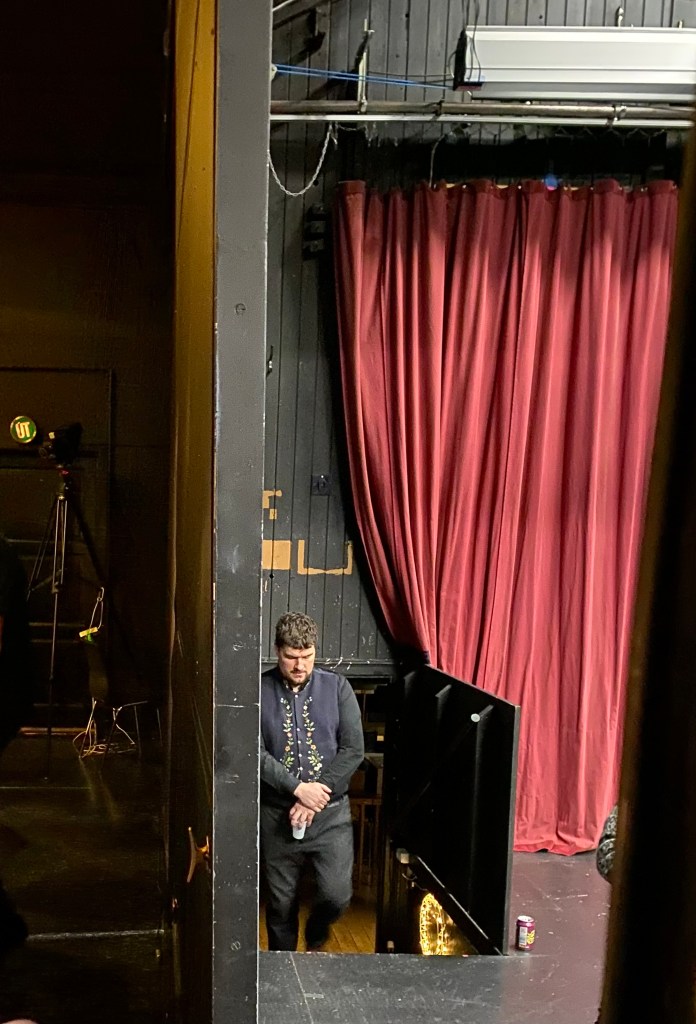
The evening warmed up to loosen the singers and set the natural chain formation with Jón Rói Høgnesen from Eysturoyar dansifelag, leading the Rasmus Effersøe penned Føroyingar, sum her nu komi saman. Then directly after six short stanzas Regin smiður begun to be sung. The main ballads of the Sjúrðar kvæði are firstly Regin smiður, followed by Brynhildar táttur, and lastly Høgna táttur. Høgna tátttur is sometimes split into two ballads. The fourth ballad is called Aldrias táttur or Annar Høgna táttur. The ballads come in different versions or variants depending on who wrote them down and who recited them. The Sjúrðar kvæði that was held in full for this particular evening was the variant written down by Hammershaimb and published in 1851 in his Færøiske Kvæder I. These correspond to variants H [I], G [II] and H [III+IV]. Regin smiður was led by Óli Reinert á Geilini from Tøkum Lætt.It is the shortest of the three at 131 stanzas and easily the more familiar ballad. It sets the scene and acts as a warm kick-starter for the evening with everyone knowing the words. To see the human chain of singers weaving in unison in snake formation is quite something to behold as the ballad sings of the serpent being killed by Sjúrður. Jóhannis Joensen í Miðvági from Vága dansefelag took over as skipper for Brynhildar táttur. This is love poetry and drama at its best, the women are central to the plot and the female characters hold the ballad with the chain of singers clearly enjoying the emotional pull of the rendition. This variant has 238 stanzas and completes with the closing words –
‘Nú skal lætta ljóði av, ‘Now I shall bring the song to an end,
eg kvøði ei longur á sinni, I sing no longer at this time
nú skal taka upp triðja tátt now I shall take up the third part of the ballad
og víðari leggja í minni.’ and continue to keep it in memory.’
Stanza 238, V.U. Hammershaimb Færøiske kvæðer I. 1851
Kjartan Atlason from Dansifelagið í Havn took up the mantle for the daunting task of leading Høgna táttur. This is the longest ballad of the three as in this variant choice it also encompasses the second ballad of Høgni of Aldrias táttur. The ballad runs for 254 verses. Add in refrains and that is a pretty substantial ballad to lead at the close of the night. I was happy to dance the ballad in full.
After the last refrain was triumphantly belted out, the gathering continued with singing as everyone celebrated the accomplishment and over a local beer or Föroya Bjór, Evert Taube’s Calle Schewens Vals from Sweden and Helga Hermansen’s Her sita menskir menn to the tune of Kom upp á fjallatind were heartily sung.
The evening would not have been possible without all the hard work of the organisers, technicians, kitchenhands (just like in Shetland at community halls, there is always a great choice of cake) and most importantly the enthusiasm of the dance association members from whence those very people came. The division of skipper for each ballad, from various parts of the Faroe Islands, not only Tórshavn gave the event an inclusivity and depth to the tradition. Individuals flew in from Copenhagen, no doubt from Fótatraðk, the dance association of Faroese dance in Copenhagen which often holds events at Føroyahusið [the Faroese House]. Participants had taken time to methodically learn the stanzas of a ballad that was unfamiliar to them in its fullness. Høgna táttur as the longest is complicated with many scenes and turns of fate for the protagonists.
The event happened on the back of winter Jazz week – Vetrarjazz showcasing the breath of Faroese music traditions. The event has also led to documentation of the participants and their thoughts. Their motivations for attending this particular evening and recreating the Sjúrðar cycle in one. The documentation has provided insights into people’s everyday experience of the dance, their relationship with the dance associations and their approach to learning the tradition and in particular the Sjúrðar kvæði cycle. The representations so far have tried to capture these snippets but also represent a broad range of members. Young and old, female and male, Faroese or Scandinavian as well as from the different islands giving a wide lens of the participation.
In my own documentation I said that I supposed it might seem like a crazy idea to travel to the Faroe Islands from Stockholm in January to attend a dance event. The opportunity to sing-dance the whole of Høgna táttur which I have not heard or seen performed before felt like something to not pass up. I also wanted to participate in the Sjúrðar kvæði event because it felt important to not just look at the ballads in print but to give them life by dancing them communally. Before travelling to the Faroe Islands I listened to a few ballad recordings on the digital sound archive – bandasavn. I have read all of the three ballads previously and know the story. Only Regin smiður I had danced before.
On the Sunday I visited The National Gallery of the Faroe Islands – Listasavn Føroya which had an exhibition entitled Tónar í list or ‘Music in art’ which seemed fitting for my visit. The kvæði and Faroese dance-song tradition was visually represented in the exhibition and encapsulates not only a poetic, literary and narrative art form but also represents a participatory performance, a type of communal theatre where everyone has a role, there is no real audience only participants. Much like the Faroe Islands in microcosm – no one is an audience member, everyone is a participant in trying to make a Faroese world which is their own.
This trip would not have been possible without the welcome and support of Gunnar Restoff, Sláið ring and Brynhild Kamban, PhD scholar and fellow CAS project member at the University of the Faroe Islands. Thanks also to Tóta Árnadóttir PhD candidate and fellow CAS project member and Helgi.
Anthony Jay Olsson, February, 2024


 Odin's Eye Blog
Leave a reply to Clyde Cancel reply