

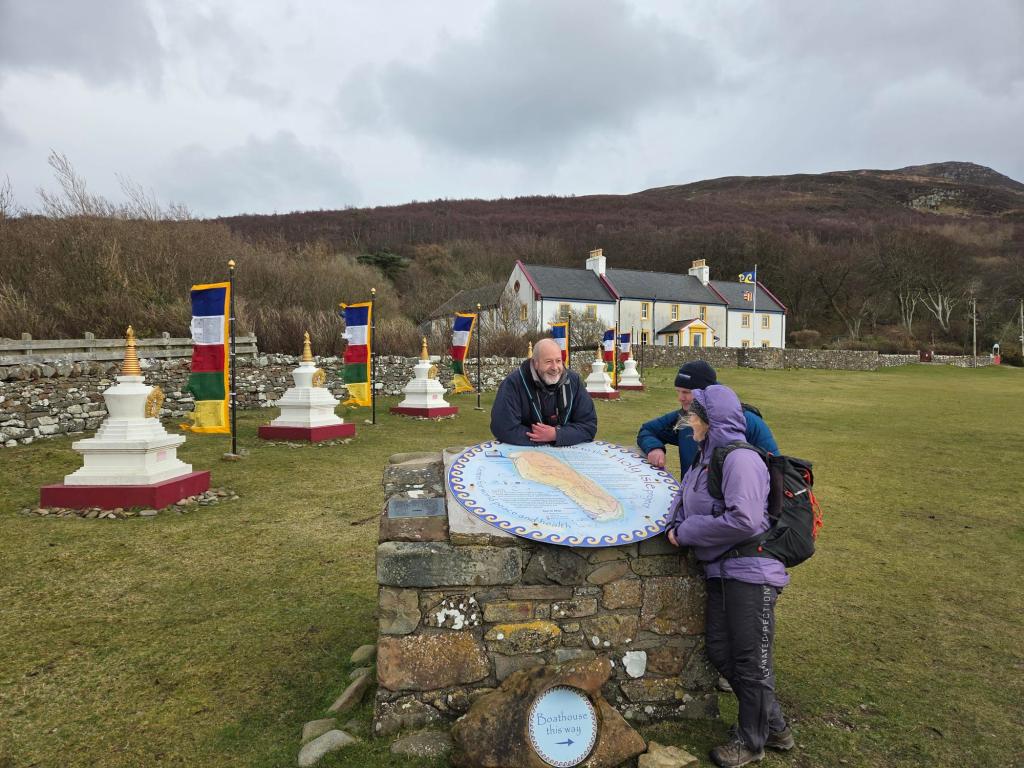
Professor Alex Sanmark from the UHI Institute for Northern Studies, along with Viking burial expert Caroline Patterson, recently travelled to the Scottish island of Arran. They organised a two-day project with Alex Dickinson and his team at Mogabout, a company that offers unique tours across the Isle of Arran.
This project is part of the ongoing UHI Tourism Knowledge Exchange Initiative, which connects research and scholarship with businesses, public agencies, and communities. The programme aims to collaborate with both local and global stakeholders to ensure that the research conducted at UHI has a meaningful impact and contributes to the sustainability of communities in the Scottish Highlands and Islands.
The purpose of the visit was to explore how Mogabout owner, Alex could expand his offerings by introducing tourists to the fascinating Viking sites located across Arran during their tours.
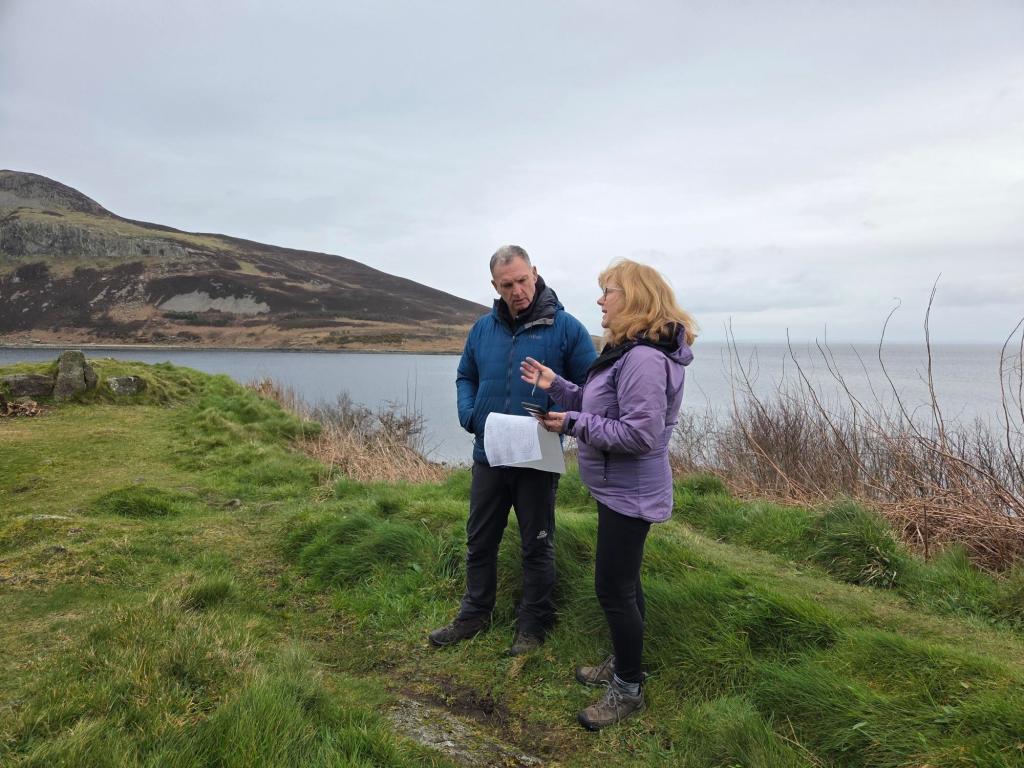
The first day began with a study of the Viking-Age burials at Lamlash Bay, specifically at Millhill and King’s Cross Point. The latter site was likely very prominent when it was originally constructed and could be seen by passing ships. These burials indicate that Arran, or at least Lamlash, was under Norse control at that time, possibly around 870 AD, as Lamlash would have been an obvious stopping point and resupply area for the large fleet of Olaf and Ivar of Dublin, who were planning to besiege Dunbarton that year.
King Hakon of Norway utilised Lamlash Bay in 1263 after departing from the Isle of Gigha and before continuing to the Cumbraes in the Firth of Clyde. It was during his time at Arran that Norwegian negotiations with the Scottish king began in earnest. The Scots appeared willing to relinquish the Hebrides but were not prepared to give up Arran, the Cumbraes, or Bute. According to the Icelandic saga, Hakon had around 120 ships at that time, varying in size but ‘most of them great,’ so Lamlash Bay would have been quite crowded!
There is no mention of a battle at Arran, suggesting that the locals accepted the situation and either gave or sold anything the fleet required. Following the well-known Battle of Largs, the fleet returned to Lamlash Bay and stayed there for a few nights. While in Lamlash, Hakon received a delegation from Ireland asking for assistance against the English. Hakon seemed eager to help, but his men were not as inclined.
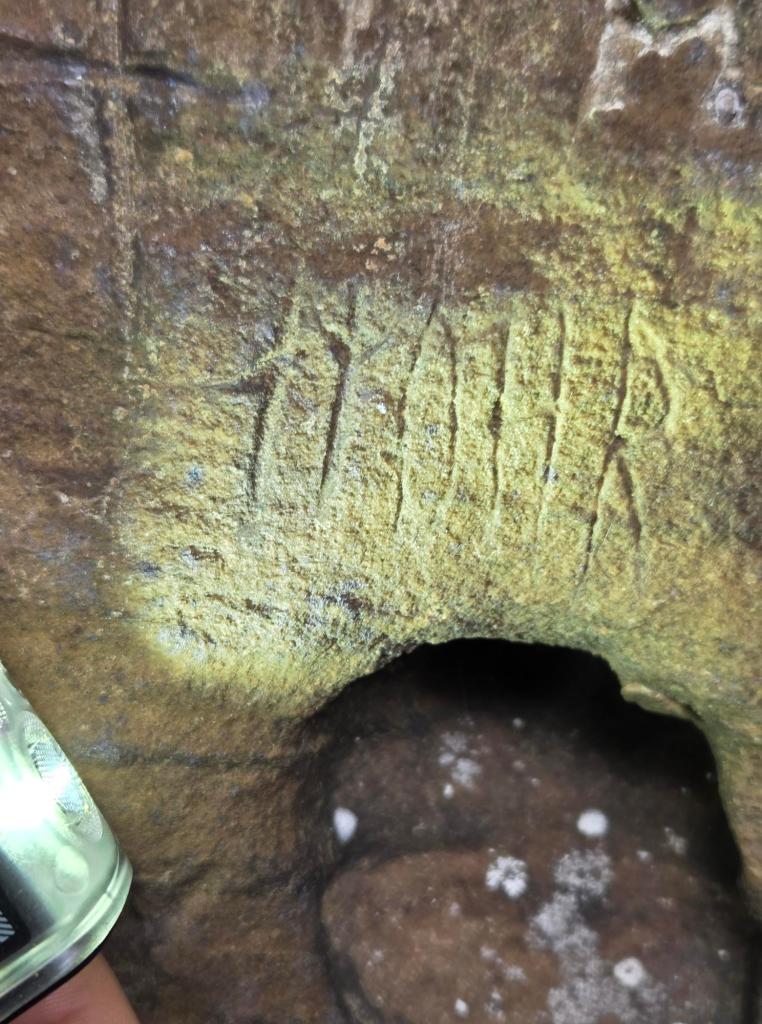
During this time, he also held a thing (assembly) —possibly to discuss the Irish request—and eventually departed as the fleet was running low on supplies. It is believed that some, and possibly all, of the eight runic inscriptions found in St. Molaise’s cave on Holy Isle were created by members of Hakon’s fleet. At least three of these inscriptions seem to have been made by Norwegian carvers, although one may have been made by a local. All of the inscriptions are consistent with the 13th century.
There are several place names on Arran of Old Norse origin, along with some Gaelic sites of significance. Dr Shane McLeod, a Postdoctoral Research Associate at the UHI Institute for Northern Studies, suggests that these names may have originated in the 12th century during the time of Somerled (King of the Isles and Man) and his descendants. This implies that they could still have been in use a century later when Hakon sailed past the area.
Professor Sanmark said, “This is the second time we have collaborated with the local tourism sector on the west coast of Scotland through the UHI Knowledge Exchange Programme. It was a pleasure and a privilege to work with Alex Dickinson to develop materials he could use this summer to create new tours for visitors booked through his unique and exciting company. It was also rewarding to see how our research into the Viking and Norse periods directly benefits Mogabout, and we hope to have the opportunity to create further heritage-based offerings in the future.”
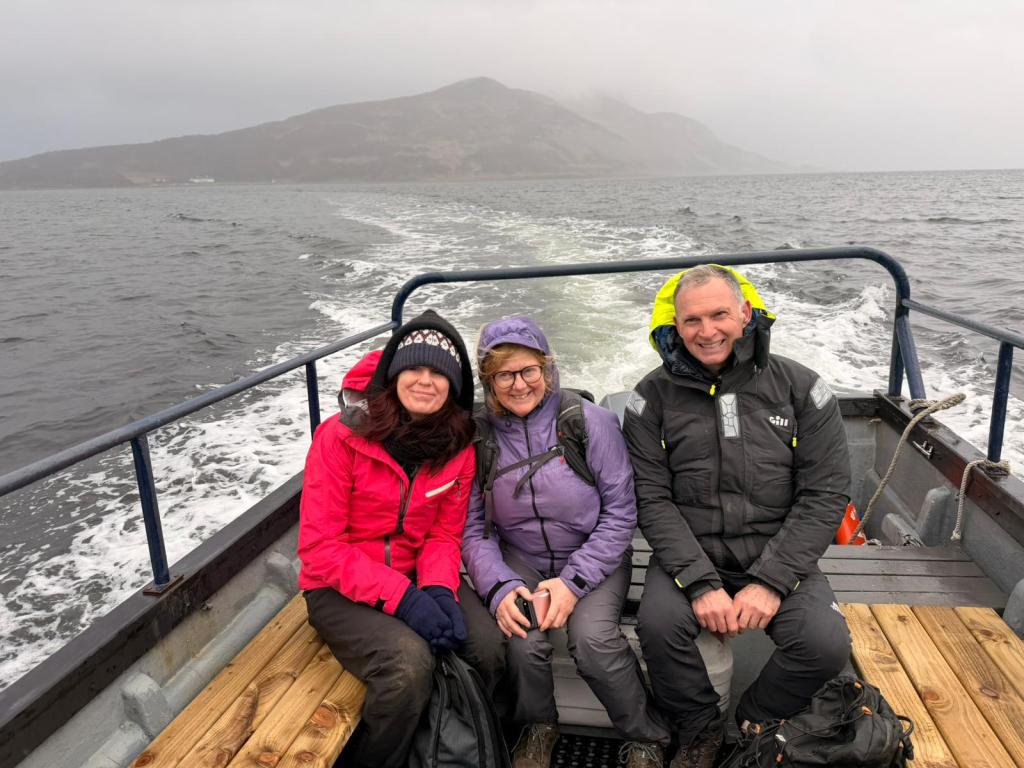
Mogabout is a tour company based on the Isle of Arran and is renowned for its specialised 4×4 adventures. These expertly guided tours take visitors to breathtaking landscapes and hidden gems that are often difficult for the average tourist to reach, showcasing the island’s stunning natural beauty and rich cultural heritage.
This UHI Knowledge Exchange initiative is a project aimed at fostering further heritage and tourism development on Arran. The exploratory phase is funded by the UHI Tourism Knowledge Exchange Program.
Main image shows Alex, Grant (Lamlash Cruises) and Caroline at the Buddhist monastery on Holy Isle, Arran.
If you feel inspired to join us at UHI Institute for Northern Studies then drop us a line on ins@UHI.ac.uk ,contact us through our website or our social media platforms.
 Odin's Eye Blog
Leave a comment