


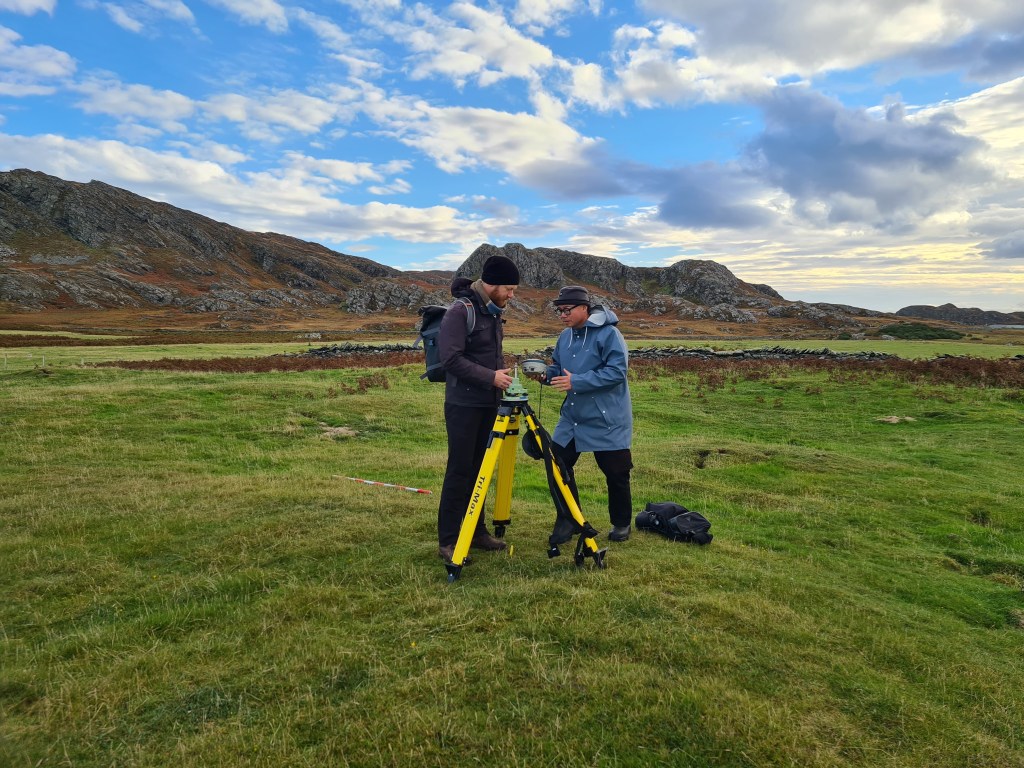
A team of archaeologists from the University of the Highlands and Islands Institute for Northern Studies are investigating the possibility Vikings used shortcuts over land to help them move warships and smaller boats around Scotland’s west coast.
The research forms part of the ongoing Norse and the Sea project, which, in collaboration with geophysicists and archaeologists from Kiel University and the Swedish History Museum aims to investigate the Viking and Norse maritime cultural heritage landscape in Scotland, focusing on western Scotland.
As part of this research, Professor Alex Sanmark and Dr Shane McLeod of UHI Institute for Northern Studies are currently studying portages—areas of land where small boats or cargo were dragged across a low-lying isthmus from one body of water to another. Written evidence suggests this labour-intensive process was done to avoid bad weather, save time, and avoid treacherous waters. The portage would have saved crews from navigating the 64km dangerous journey around the Kintyre peninsula.
Dr Shane McLeod said, “Portage sites may have used split wood rollers (Old Norse hlunnr), greased with seaweed to make it easier to drag the boats. Hlunnr survives as a placename on Shetland as a likely portage site; however, a far more common Gaelic placename is Tarbet which means over-bringing. A good description of portage”
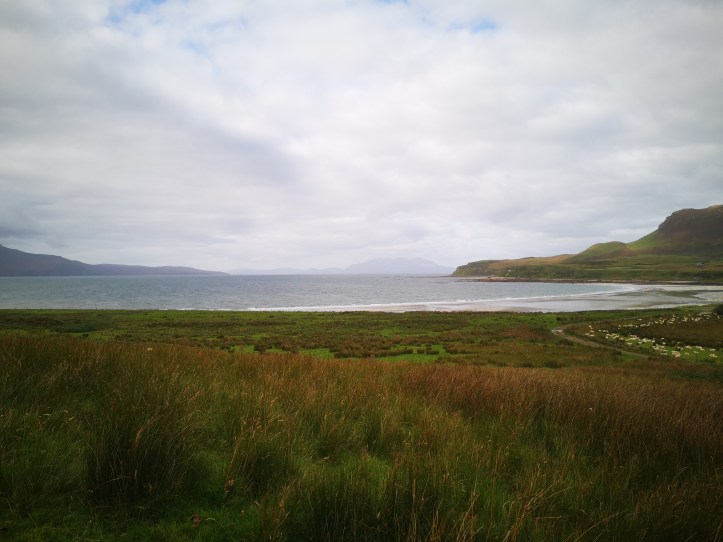
The team also points to the Saga of Magnus Barelegs, which suggests that Magnus, who reigned in Norway from 1093 to 1103, sat in a light ship and had it portaged across Tarbet at Kintyre. This was done to show that the Kintyre peninsula was an island and, therefore, could be claimed by Norway. In common with many sagas, it is not certain that this colourful episode happened as described, but the account says that warships were often dragged across the land at Tarbet, suggesting that it was a well-known portage site.
To support the written evidence, in 1990 a farmer working a field in West Tarbet, ploughed up several pieces of oak up to 4.95m in length. It has been suggested that they may be related to the Viking/ Norse portage site, but dating at the time proved inconclusive.
However, new technological processes, such as the wiggle-matching procedure, could indeed clarify the age of the wood. Funding has been granted by the Society of Antiquaries of Scotland to progress this process and hopefully confirm that Tarbet was indeed a portage in the Viking and Norse eras.
Links:
Norse Navigation in the Northern Isles
If this blog has fired your enthusiasm for the Viking or Norse Era, then check out our flexible undergraduate and postgraduate study options at the University of the Highlands and Islands Institute for Northern Studies or email us at ins@uhi.ac.uk
 Odin's Eye Blog
Leave a comment